A solar system is a long-term investment. Choosing on price per kilowatt alone can leave you with a system that doesn't fit how you actually use power. Before installing, consider these five points.
1. Look at how you use electricity
Solar panels only produce power while the sun is up, so a system pays off best where a lot of electricity is used during the day: offices, factories, or homes that run air conditioning in the daytime. Around 12 months of past electricity bills shows how your usage changes through the year and helps size the system correctly.
2. Choose the right type of system
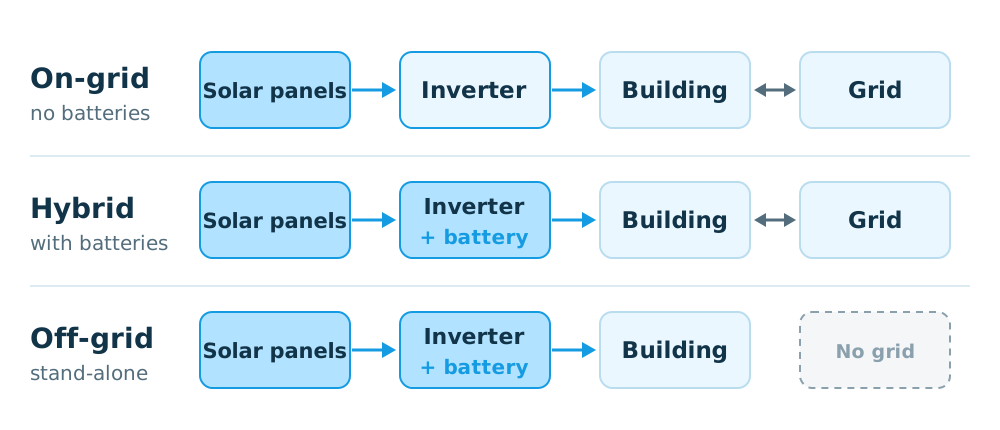
- On-grid: works alongside grid power with no batteries. Lower cost, and suits users who mainly consume power during the day.
- Hybrid: adds batteries to store power for the evening or for outages. Costs more but is more flexible.
- Off-grid: not connected to the grid at all. Suits sites the power grid doesn't reach.
3. Check the roof and structure
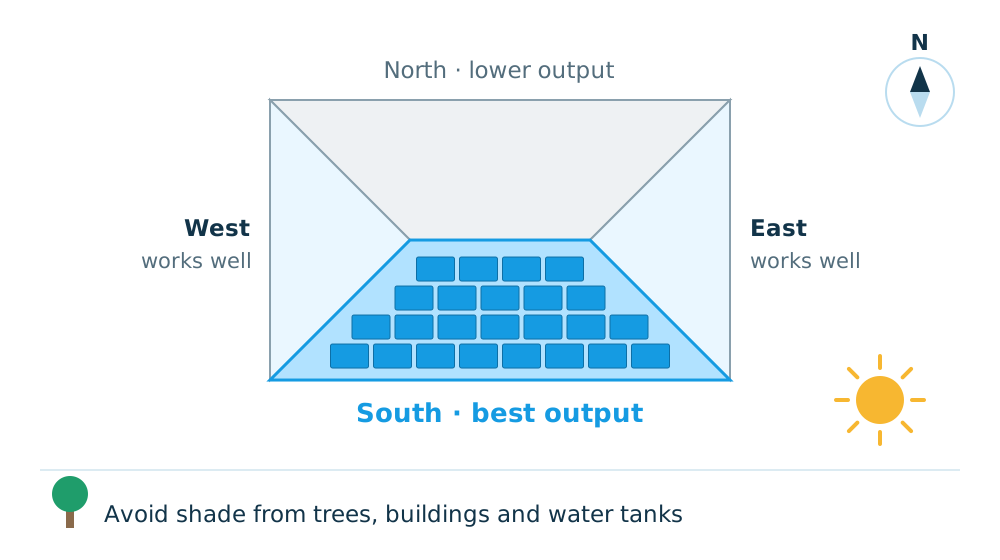
In Thailand, south-facing panels usually produce the most, but east and west work too. Shade from trees, neighbouring buildings or water tanks is a bigger concern, as it can cut output significantly. Have an engineer check that the roof structure is strong enough, and if the roof is near the end of its life, repair or replace it before installation so the panels don't have to be removed later.
4. Prepare for permits
Systems connected to the grid must be approved and inspected by the local electricity authority (the Metropolitan Electricity Authority or the Provincial Electricity Authority) before connection. Other agencies may also be involved, depending on system size, the type of building and the location. Your installer should explain the steps and help prepare the documents from the start.
5. Equipment, warranties and aftercare
- Panels, inverters and installation workmanship usually carry separate warranties. Ask for the details in writing.
- The system should have suitable electrical protection devices and be installed to standard.
- Dust and dirt on the panels reduce output, so clean the panels and inspect the system regularly.
- A monitoring app lets you see straight away when production drops unexpectedly.
Payback period depends on your electricity rate, how much power you use during the day and the system size, so there is no single figure that fits every site. Ask your installer to calculate it from your actual electricity bills.